
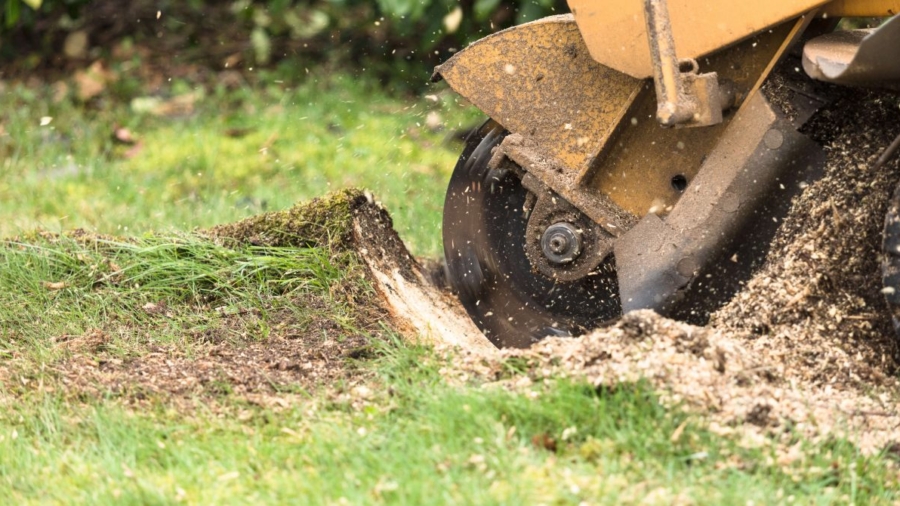
A tree comes down and everyone forgets about the stump until they try to mow around it. Stump grinding Sydney searches spike about a week after every storm season, usually from homeowners who accepted a removal quote that quietly excluded the stump. Here is how the process works, what a fair price looks like in Sydney, and what to do with the pile of chip it leaves behind.
Grinding Versus Removal: Two Different Jobs
Stump Removal uses a rotating cutting wheel fitted with carbide teeth to chew the stump down to below ground level, typically 150mm to 300mm deep. The stump is converted into a mix of wood chip and soil that fills the hole. The root system stays in the ground and decomposes over five to ten years.
Stump removal, sometimes called excavation, physically digs the stump and major root plate out with an excavator. It leaves a large hole requiring backfill, costs substantially more, and damages far more of the surrounding soil and any nearby services.
For ninety per cent of residential jobs, grinding is the right answer. Excavation is reserved for cases where you are pouring a slab or footing directly over the stump position, installing a pool, or dealing with a species that suckers aggressively from remaining roots.
Why Bother at All
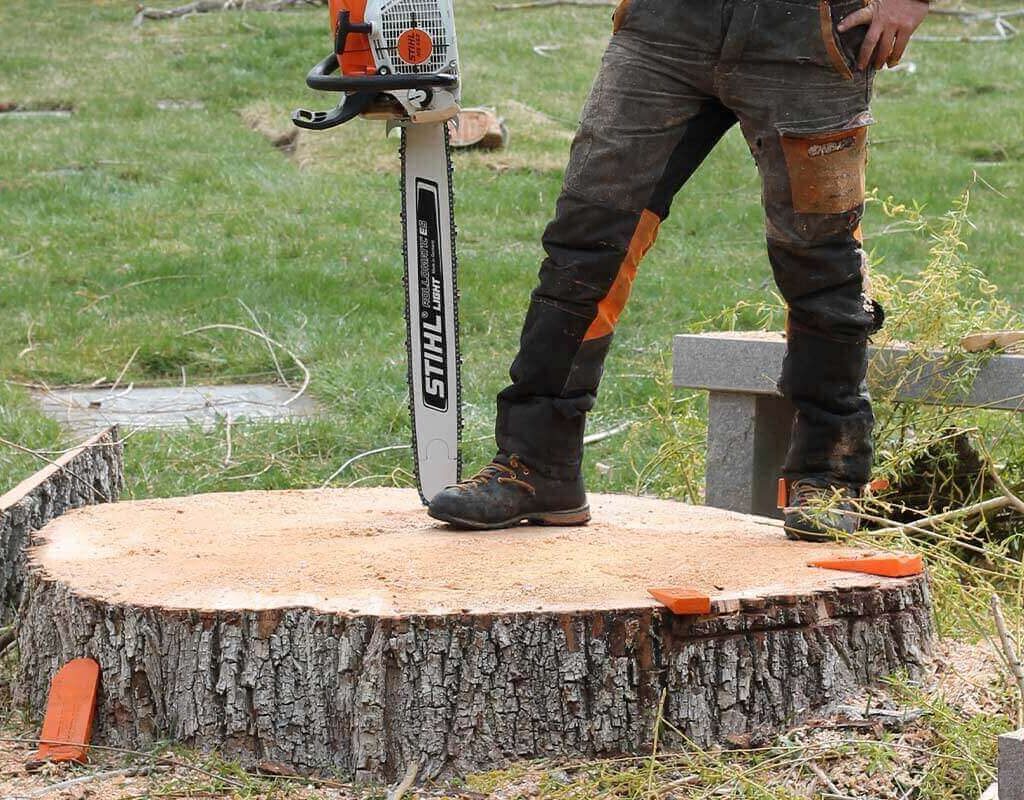
Leaving a stump is not a neutral choice. Stumps are a trip hazard, a mower killer and a genuine attractant for termites, particularly in Sydney where Coptotermes species readily colonise decaying hardwood stumps close to houses. Many species also throw suckers from the stump and root plate indefinitely, meaning you spend the next decade cutting shoots. And a stump makes the ground unusable for turf, paving or planting.
What Stump Grinding Costs in Sydney
Pricing is usually driven by stump diameter, hardness and access:
- Small stump under 300mm diameter: $80 to $180
- Medium stump, 300mm to 600mm: $180 to $400
- Large stump, 600mm to 1,000mm: $400 to $900
- Very large gum or fig stump over 1,000mm: $900 to $2,500
- Multiple stumps on one visit: expect 20 to 40 per cent off the second and subsequent stumps
Minimum call-out fees of $150 to $250 apply almost everywhere, so grinding one small stump on its own is poor value. Bundle it with other work.
Access Is the Hidden Cost Driver
A standard narrow-access grinder is roughly 750mm to 900mm wide, so it fits through most side gates. If your gate is narrower, or there are stairs, a steep grade or a retaining wall between the street and the stump, the crew needs either a smaller walk-behind unit, which is slower, or a crane lift, which is expensive. Measure your narrowest access point and tell the contractor at quoting stage. It is the number one cause of price revisions on the day.
Safety and Site Preparation
Stump grinding throws debris hard and fast. Professional operators use full face protection, set up debris blankets or plywood shields, and clear a wide exclusion zone. Before the crew arrives, mark the location of irrigation lines, garden lighting cables, retaining wall footings and any underground services. Grinding through a poly water line is a nuisance. Grinding through a consumer mains cable or a gas service is a serious incident, and SafeWork NSW lists tree work among its highest-risk activities on its tree work and arboriculture hazard page.
Any stump within a metre or so of a boundary, a service pit or a structure warrants a Dial Before You Dig enquiry. Reputable operators will do this as standard.
What You Are Left With
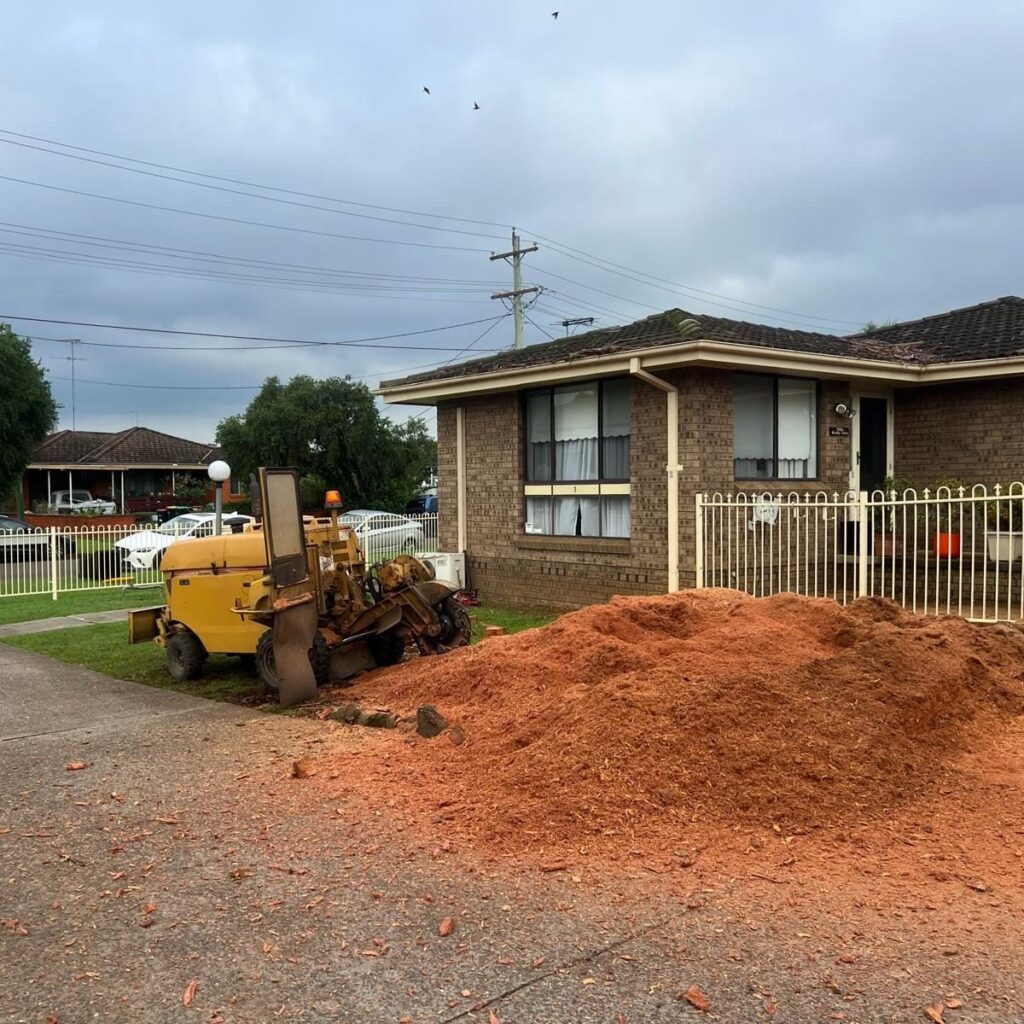
A typical grind produces a mound of wood chip and soil roughly twice the volume of the original stump. You have three options.
Leave it in place. The mound settles over six to twelve months as the chip breaks down. Fine if you are not planting immediately.
Spread it as mulch. Fresh stump grindings work well on garden beds and pathways, though they are coarser and more soil-contaminated than clean arborist chip.
Remove and backfill with topsoil. This is what you want if you are laying turf, paving or planting straight away, because fresh wood chip in the root zone temporarily ties up nitrogen and turf will yellow. Expect to pay an extra $80 to $250 for removal and clean topsoil backfill.
Replanting in a Ground Stump Position
If you plan to plant a new tree in the same spot, do not plant directly into the grindings. Excavate the chip out to at least 400mm deep and 600mm wide, backfill with a quality soil blend, and plant slightly offset from the original trunk position if you can. This avoids both the nitrogen drawdown and any residual root pathogens.
Green Waste and Legal Disposal
If the crew is taking the grindings away, that material is regulated garden organics waste. The NSW EPA requires garden organics loads to be covered in transit and delivered only to a facility that can lawfully accept them, as set out in its guidance on disposing of garden waste. Both the waste owner and the transporter carry legal responsibility. In practice, that means using an operator with a proper tipper and a receipt from a licensed facility, not someone with a ute and a vague plan.
Do You Need Council Approval to Grind a Stump?
Generally no, provided the tree itself was lawfully removed. Grinding a stump is not tree removal. However, if the stump belongs to a tree that was removed without approval, grinding it does not erase the breach and can make the investigation worse by destroying the evidence of trunk diameter. If there is any doubt about the original removal, sort the paperwork first.
Bottom Line
Grind rather than excavate unless you are building over the spot. Measure your access. Bundle multiple stumps into one visit. Decide up front whether you want the chip left as mulch or carted away and the hole topsoiled, and get that in writing.
